
If bulging, achy varicose veins are keeping you from wearing shorts, standing through a workday, or simply feeling good on your feet, you are far from alone — and you no longer need surgery to fix them. At Northwest Cardiovascular Clinic, our primary treatment for varicose veins is Varithena®, an FDA-approved, non-surgical option performed right in our office. Patients from Tomball, Cypress, Spring, and across northwest Houston come to us for this quick, comfortable procedure. Here is how it works and what to expect.
What is Varithena?
Varithena is a prescription microfoam (polidocanol 1%) used to treat varicose veins caused by problems in the great saphenous vein and related veins in the leg. It is the only FDA-approved, commercially prepared polidocanol microfoam of its kind. Instead of cutting out or heating the vein, your physician injects a small amount of this specially engineered foam directly into the diseased vein through a tiny catheter or needle.
How Varithena works
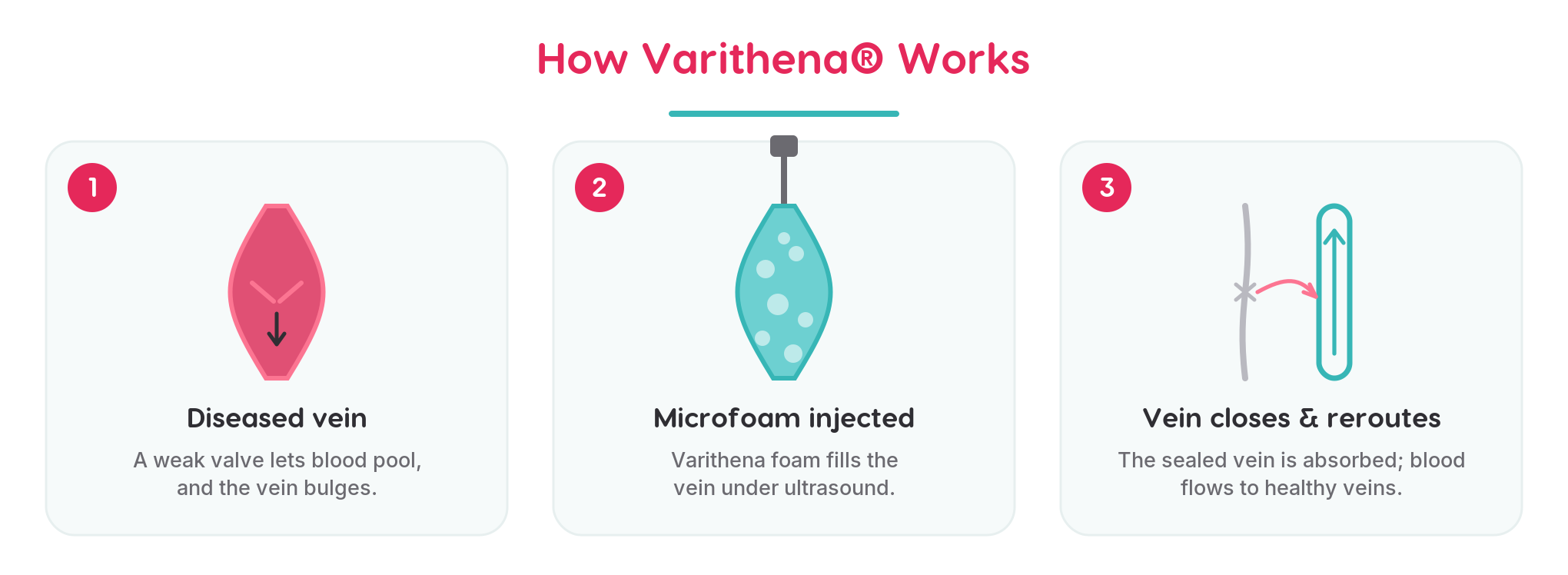
The foam is injected slowly under ultrasound guidance, so your doctor can watch it fill the vein in real time. As the microfoam moves through the vein, it displaces the blood and makes contact with the vein wall along its entire surface. The vein then contracts and collapses, sealing itself shut. Over the following weeks your body naturally absorbs the closed vein, and blood simply reroutes to nearby healthy veins — improving circulation and relieving symptoms. The tiny, low-nitrogen bubbles in the foam dissolve harmlessly into your bloodstream.
What Varithena treats
Varithena is designed for varicose veins linked to venous reflux — the underlying valve problem behind most varicose veins — in the great saphenous vein, accessory saphenous veins, and the visible bulging veins they feed, both above and below the knee. Beyond appearance, it can relieve the symptoms that come with vein disease, including:
- Aching, heaviness, or fatigue in the legs
- Swelling around the ankles and lower legs
- Throbbing, cramping, or restless legs
- Itching or skin changes over bulging veins
If you have already noticed skin discoloration or bleeding from a vein, treating the underlying reflux becomes even more important. (You can read more about how varicose veins progress and what happens if they burst.)
Why we use Varithena
We chose Varithena as our primary varicose vein treatment because it offers real advantages for our patients:
- Non-surgical. No incisions, no stitches, and no vein stripping — just a needle or small catheter.
- No heat. Unlike laser or radiofrequency ablation, Varithena does not use thermal energy, so it does not require the multiple injections of tumescent anesthesia those procedures need.
- Reaches difficult veins. Because it is a foam that flows, it can treat twisting, tortuous veins that a stiff laser fiber cannot easily navigate.
- In-office and fast. Most treatments take about an hour, and you walk out the same day.
- Minimal downtime. Most patients return to their normal routine right away.
Varithena vs. other varicose vein treatments
There are several ways to treat varicose veins, and the best choice depends on your anatomy:
- Vein stripping surgery physically removes the vein through incisions and generally requires anesthesia and a longer recovery. Varithena avoids surgery entirely.
- Thermal ablation (laser or radiofrequency) seals the vein with heat and works well for straight veins, but needs tumescent anesthesia and is harder to use on winding veins.
- Traditional sclerotherapy injects a liquid solution and is excellent for smaller spider and reticular veins, while Varithena’s foam is formulated for larger saphenous veins.
Many patients do best with a tailored plan, and during your consultation we will recommend the approach — or combination — that fits your veins.
What to expect at your appointment
Your care starts with a consultation and a duplex ultrasound to map your veins and confirm that reflux is present — this is how we determine whether Varithena is right for you, and it is also what insurers require. On treatment day, the procedure itself is straightforward:
- The skin over the vein is cleaned and numbed at the access point.
- Your physician injects the Varithena foam under ultrasound guidance.
- We apply compression stockings and have you walk for about 10 minutes.
- You go home the same day, wear compression as directed (generally for about two weeks), and keep moving — short, frequent walks help.
Most people return to everyday activities quickly, while avoiding heavy exercise, long flights, and prolonged standing for a short period. Some bruising, tenderness, or a firm feeling along the treated vein is normal and fades over time. As with any vein procedure there are risks, including a small chance of blood clots, which is why the ultrasound follow-ups and compression matter.

Is Varithena covered by insurance?
Often, yes. When varicose veins are symptomatic and venous reflux is documented on ultrasound, treatment is usually considered medically necessary and covered by most insurance plans, including Medicare. Purely cosmetic treatment is typically not covered. Our team will verify your benefits and explain any costs before you commit to anything.
Varicose vein treatment for Tomball & Cypress
Northwest Cardiovascular Clinic is conveniently located just off SH 249 (Tomball Parkway) in northwest Houston, serving patients throughout Tomball, Cypress, Spring, and the greater Houston area. Dr. Ismail Dairywala is a board-certified cardiovascular specialist with deep experience in vein care, and our office offers Varithena and the full range of vein treatment options under one roof.
If you are ready to feel — and see — the difference in your legs, contact our office to schedule a vein consultation. We would love to help you get back on your feet.
Frequently asked questions
Is Varithena a surgery?
No. Varithena is a non-surgical, in-office treatment. Instead of incisions and stitches, your physician injects a microfoam into the vein through a needle or small catheter, so there is nothing to cut or remove.
How long is recovery after Varithena?
Most patients return to their normal daily activities the same day or the next. You will wear compression stockings for about two weeks and keep walking, while avoiding heavy exercise, prolonged standing, and long travel for a short period.
Does Varithena hurt?
Discomfort is usually minimal. The access point is numbed, and some people feel mild cramping or tightness as the vein closes. Temporary bruising or tenderness along the vein is normal and fades over the following weeks.
Is Varithena covered by insurance?
It often is. When your varicose veins cause symptoms and an ultrasound documents venous reflux, treatment is usually considered medically necessary and covered by most plans, including Medicare. Cosmetic-only treatment generally is not, and our team verifies your benefits in advance.
How is Varithena different from laser vein ablation?
Varithena uses a foam medication rather than heat. Because there is no thermal energy, it does not require the tumescent anesthesia that laser and radiofrequency ablation need, and its foam can reach twisting veins that a rigid laser fiber cannot.
Where can I get Varithena treatment near Tomball or Cypress?
Northwest Cardiovascular Clinic offers Varithena at our office just off SH 249 in northwest Houston, serving Tomball, Cypress, Spring, and the surrounding communities. Call (281) 807-5253 to schedule a consultation.