
Heart Catheterization & Angioplasty
A catheter-based procedure to both diagnose and treat blocked heart arteries — often in a single visit.

What is cardiac catheterization?
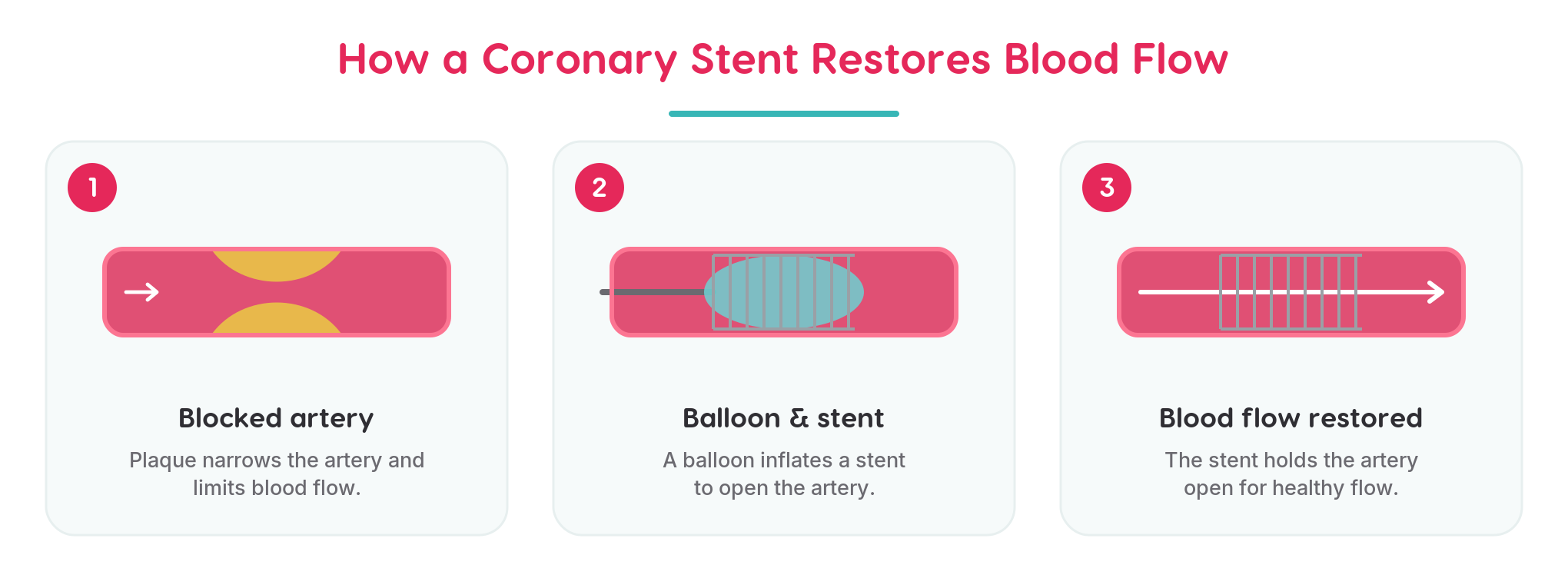
During cardiac catheterization, a slender tube (catheter) is threaded through a blood vessel to the heart to measure pressures, assess blood flow, and examine the coronary arteries. When a blockage is found, angioplasty — inflating a tiny balloon — reopens the artery, and a stent (a small mesh scaffold) is placed to hold it open and restore normal flow.
Why it's done
It is used to evaluate and treat coronary artery disease, relieve angina that limits your daily life, and — during a heart attack — quickly reopen a blocked artery to save heart muscle. Because it both diagnoses and treats, many patients have their blockage fixed in the same visit.
How to prepare
You'll typically fast for several hours beforehand. Share your full medication list so we can advise which to hold or continue, and let us know about any allergies, especially to contrast dye. Plan for someone to drive you home afterward.
What happens during the procedure
Performed with sedation and local anesthesia through the wrist (radial) or groin (femoral), the procedure is comfortable and usually takes under an hour. You'll be awake but relaxed. If a stent is placed, most are drug-eluting stents that help keep the artery open long-term.
Recovery and aftercare
Many patients go home the same day or after a short observation. You'll have a brief activity restriction and clear aftercare instructions. If you received a stent, it is essential to take your prescribed anti-platelet medication (such as aspirin plus a second blood thinner) exactly as directed — stopping early can cause the stent to clot.
Is it safe?
Angioplasty and stenting are common, well-established procedures with a strong safety record. Minor bruising at the access site is normal; serious complications are uncommon. We'll discuss your personal risks and benefits before proceeding.
Insurance & scheduling
We accept most major insurance plans, including Medicare. When a test or treatment is medically necessary, it is typically covered — our team verifies your benefits and explains any out-of-pocket costs before you begin. Request an appointment through our contact page or call (281) 807-5253.
Cardiology & vein care for Tomball & Cypress
Northwest Cardiovascular Clinic is located just off SH 249 (Tomball Parkway) in northwest Houston, serving patients throughout Tomball, Cypress, Spring, and the greater Houston area. Dr. Ismail Dairywala, MD, FACC brings over two decades of cardiovascular experience to every visit. Contact us to schedule a consultation.
Frequently asked questions
What is the difference between catheterization and angioplasty?
Catheterization is the catheter-based procedure used to examine the heart and arteries; angioplasty (with a stent) is the treatment performed through that catheter to open a blockage. They are frequently done together in one visit.
How long does recovery from a stent take?
Most patients go home the same day or after a short observation and return to light activity within a couple of days, avoiding heavy lifting briefly. Your care team gives specific instructions.
Why do I need blood thinners after a stent?
Anti-platelet medication keeps the stent from clotting while it heals into the artery wall. Taking it exactly as prescribed — and never stopping early without your cardiologist's guidance — is essential to keep the stent open.
Is heart catheterization major surgery?
No. It is a minimally invasive, catheter-based procedure done through a small puncture at the wrist or groin, not open surgery. Most people go home the same day.
How long do stents last?
Modern drug-eluting stents are designed to be permanent and typically keep the artery open long-term. Staying on your medications and managing risk factors helps prevent new blockages.
Take the next step towards a healthy heart
Request an appointment by clicking the button below or call our office staff at (281) 807-5253.