
Varicose & Spider Vein Treatment
Modern, minimally invasive care for painful varicose veins and cosmetic spider veins — including Varithena.

What causes varicose and spider veins?
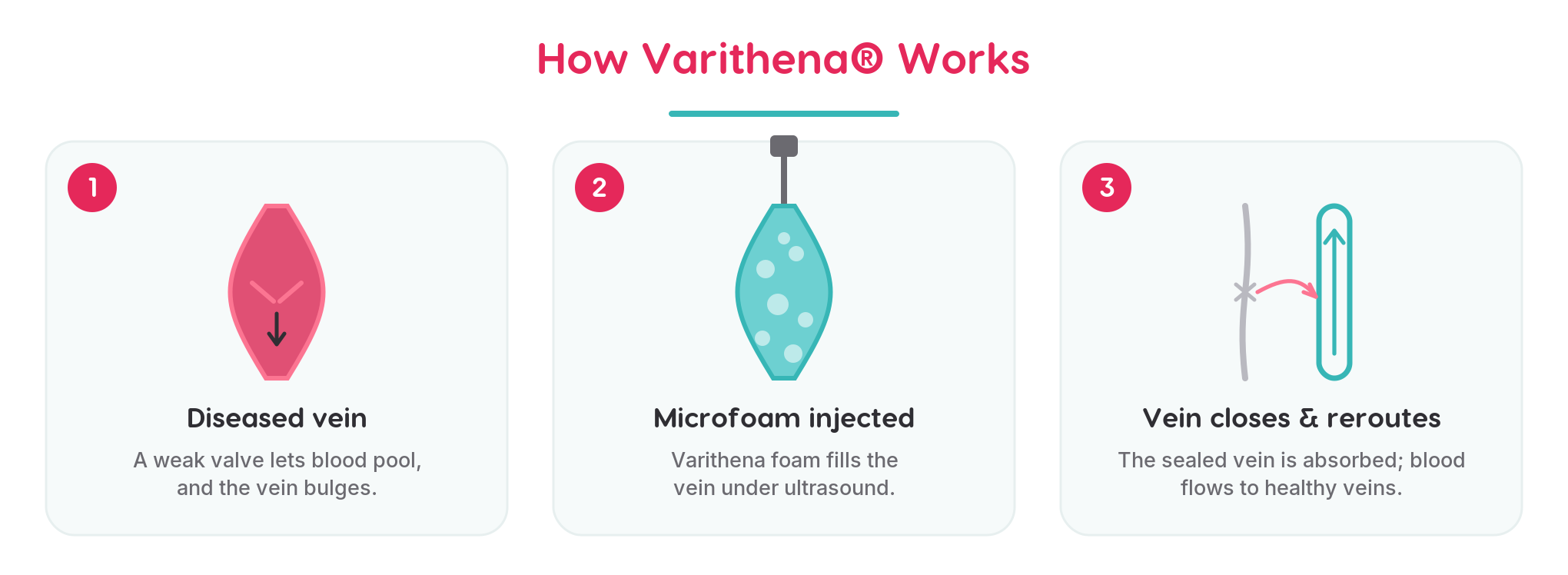
Healthy leg veins have one-way valves that push blood upward toward the heart. When those valves weaken, blood pools and pressure builds — a condition called chronic venous insufficiency. Over time this produces bulging varicose veins, fine spider veins, and symptoms like aching, heaviness, and swelling.
Symptoms and why to treat them
Beyond appearance, vein disease can cause aching or tired legs, throbbing, night cramps, itching, swelling, and — in advanced cases — skin discoloration, hardening, or slow-healing ulcers. Treating the underlying veins relieves these symptoms and prevents the disease from progressing to more serious stages.
How we evaluate your veins
Care begins with a consultation and a duplex ultrasound that maps your leg veins and confirms where the valves are failing. This tells us exactly which veins to treat and is also what insurance requires to establish medical necessity.
Our treatment options
We tailor treatment to your anatomy. Our primary treatment for larger varicose veins is Varithena®, an FDA-approved microfoam that closes the diseased vein without heat or incisions. We also offer endovenous ablation, sclerotherapy for spider veins, and compression therapy. All are minimally invasive and performed right in our office.
What to expect and recovery
Most treatments take under an hour using local anesthesia, and you walk out the same day. You'll wear compression stockings for a couple of weeks and keep moving, while avoiding heavy exercise and prolonged standing for a short period. Most people return to their routine quickly.
Is vein treatment covered by insurance?
Often, yes. When your varicose veins cause symptoms and reflux is documented on ultrasound, treatment is usually considered medically necessary and covered by most plans, including Medicare. Purely cosmetic spider-vein treatment is typically not covered — our team verifies your benefits in advance.
Insurance & scheduling
We accept most major insurance plans, including Medicare. When a test or treatment is medically necessary, it is typically covered — our team verifies your benefits and explains any out-of-pocket costs before you begin. Request an appointment through our contact page or call (281) 807-5253.
Cardiology & vein care for Tomball & Cypress
Northwest Cardiovascular Clinic is located just off SH 249 (Tomball Parkway) in northwest Houston, serving patients throughout Tomball, Cypress, Spring, and the greater Houston area. Dr. Ismail Dairywala, MD, FACC brings over two decades of cardiovascular experience to every visit. Contact us to schedule a consultation.
Frequently asked questions
What is Varithena and why do you use it?
Varithena is an FDA-approved microfoam that closes diseased varicose veins without heat, incisions, or a hospital stay. We use it as our primary treatment because it is comfortable, effective, in-office, and can treat winding veins that other methods struggle with.
Is vein treatment covered by insurance?
When your veins cause symptoms and ultrasound documents reflux, treatment is usually considered medically necessary and covered by most plans, including Medicare. Purely cosmetic spider-vein treatment generally is not. We verify your benefits before you commit.
Is vein treatment painful, and what is recovery like?
Discomfort is minimal. Treatments are done in the office under local anesthesia in under an hour, and most patients walk out the same day, wear compression stockings for about two weeks, and return to normal activity quickly.
What is the difference between varicose veins and spider veins?
Varicose veins are large, bulging, rope-like veins that often cause symptoms; spider veins are small, fine surface veins that are mainly cosmetic. Both stem from the same underlying vein-valve problem and are treated with different techniques.
How do I know if my leg symptoms are a vein problem?
Aching, heaviness, swelling, itching, or visible bulging veins that worsen after standing and improve with elevation often point to vein disease. A duplex ultrasound confirms it — and it's a quick, painless test.
Take the next step towards a healthy heart
Request an appointment by clicking the button below or call our office staff at (281) 807-5253.