

Coronary artery disease (CAD) is the most common form of heart disease and the leading cause of heart attacks in the United States — yet many people walk around with it for years before they ever feel a symptom. At Northwest Cardiovascular Clinic, we evaluate and treat coronary artery disease every day for patients across Tomball, Cypress, Spring, and northwest Houston. Here is what CAD actually is, the warning signs to know, who is most at risk, and what modern treatment looks like.
What is coronary artery disease?
Your heart muscle gets its own blood supply from the coronary arteries, three main vessels that wrap around the outside of the heart. CAD develops when those arteries become narrowed by atherosclerosis — a slow buildup of cholesterol, fat, calcium, and inflammatory cells called plaque along the artery wall. As plaque accumulates, less oxygen-rich blood reaches the heart muscle, especially during exertion when demand is highest. If a plaque ruptures and a blood clot forms suddenly on top of it, blood flow can be cut off entirely, causing a heart attack.
How common is CAD?
Heart disease has been the leading cause of death in the United States for decades, responsible for roughly 1 in every 3 deaths, and coronary artery disease is by far its most common form. Government health data suggest about 1 in 20 adults age 20 and older is living with CAD. Someone in the U.S. has a heart attack roughly every 40 seconds, and an estimated 1 in 5 heart attacks is silent — meaning the damage is only discovered later, often on a routine EKG or echocardiogram. That silent pattern is exactly why screening matters even when you feel fine.
Symptoms of coronary artery disease
Many people have no symptoms at all until the disease is advanced, which is part of what makes CAD dangerous. When symptoms do appear, the most common is angina — a pressure, squeezing, tightness, or heaviness in the chest, often brought on by exertion, stress, or a heavy meal and relieved by rest. Other symptoms include:
- Shortness of breath, especially with activity
- Unusual fatigue that is out of proportion to what you are doing
- Discomfort that spreads to the arm, shoulder, neck, jaw, or back
- Lightheadedness, cold sweats, or nausea alongside chest discomfort
Women often experience CAD differently than men. Rather than classic crushing chest pain, women are more likely to notice brief or sharp discomfort in the neck, jaw, or back, along with nausea, breathlessness, or profound fatigue — symptoms that are easy to dismiss as stress or being run down. Any of these symptoms, especially if they are new, worsening, or brought on reliably by exertion, deserve an evaluation rather than a guess.
Who is at risk for CAD?
Some risk factors you cannot change, and others respond well to treatment:
- Age and sex. Risk rises with age, and men are generally affected earlier in life than women.
- Family history. A parent or sibling with heart disease before age 55 (men) or 65 (women) raises your own risk.
- High blood pressure and high LDL cholesterol. Both damage the artery lining and accelerate plaque buildup over time.
- Diabetes and insulin resistance. High blood sugar injures blood vessels throughout the body, including the coronary arteries.
- Smoking. One of the most powerful modifiable risk factors for CAD and heart attack.
- Excess weight, inactivity, and chronic stress. Each contributes independently, and together they compound the others.
Because so many of these factors can be improved, early evaluation is not just about finding disease — it is about preventing it. We cover the numbers that matter most, including LDL, apoB, and lipoprotein(a), in our guide to cholesterol and statins, and blood pressure targets in our guide to managing high blood pressure.
How we diagnose coronary artery disease
Diagnosis starts with a detailed history and exam, then moves to testing tailored to your symptoms and risk. In our office, that typically includes a resting EKG, a stress test to see how your heart performs under exertion, and an echocardiogram to look at heart structure and function. When these point toward a blockage, or your risk is high, coronary angiography gives a definitive, direct look inside the arteries. A coronary calcium score — a quick CT scan that measures existing plaque — can also help clarify risk in people who are not yet having symptoms; we discuss when that test makes sense in our guide to preventive heart screening.
How coronary artery disease is treated
Treatment is personalized to how much disease is present and how it is affecting you. For most patients, it starts with the fundamentals:
- Lifestyle changes. A heart-healthy diet, regular activity, weight management, and quitting smoking meaningfully slow — and can partly reverse — the disease process.
- Medications. Statins to lower LDL cholesterol, aspirin or other antiplatelet therapy to reduce clotting risk, and blood-pressure medications such as beta-blockers or ACE inhibitors/ARBs when needed.
When a significant blockage is found, angioplasty and a coronary stent can restore blood flow through a small puncture in the wrist or groin, often with a same-day recovery.
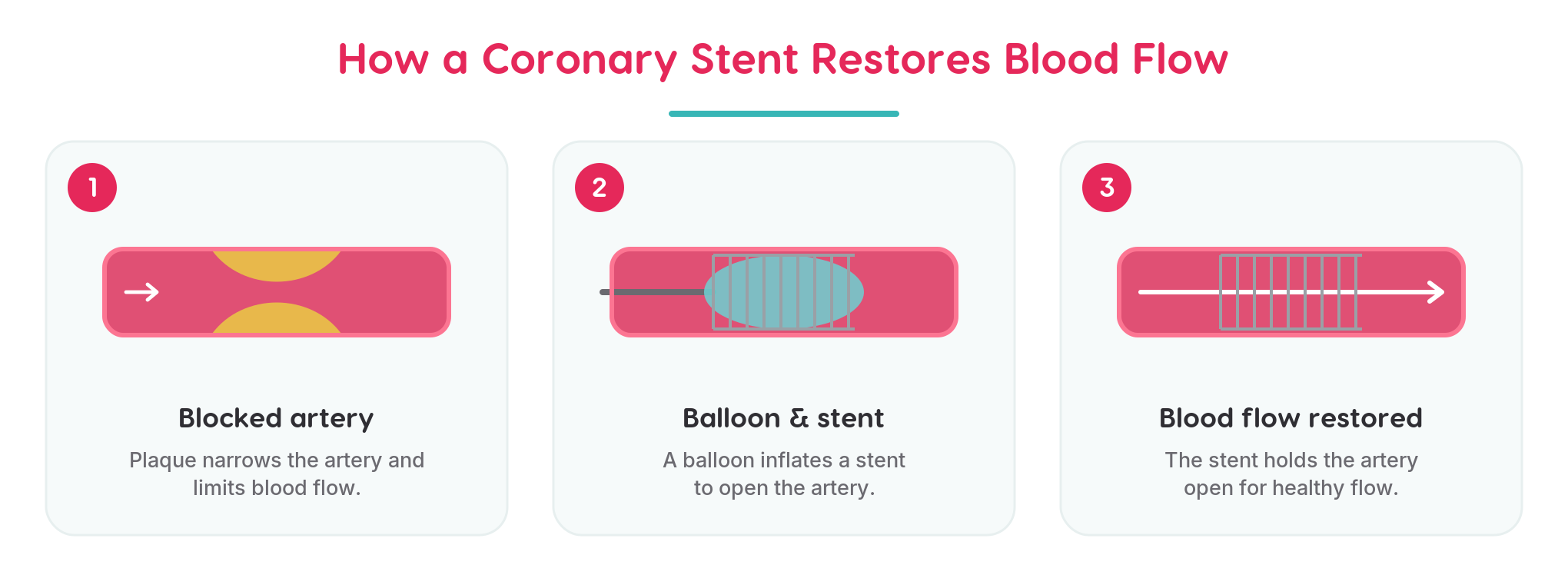
Severe blockages, disease in multiple arteries, or blockages in certain locations may instead call for coronary artery bypass surgery, which we coordinate with our hospital partners when needed.
Can CAD be prevented — or even reversed?
CAD is a lifelong condition once it develops, but its course is far from fixed. Aggressive control of LDL cholesterol and blood pressure, quitting smoking, staying active, and maintaining a healthy weight can stabilize plaque, reduce inflammation, and lower your risk of a future heart attack substantially. Many patients who commit to this plan go on to live full, active lives for decades.

When to call 911
Coronary artery disease can progress quietly, but a heart attack cannot wait. Call 911 immediately for:
- Chest pressure, tightness, or pain lasting more than a few minutes or that keeps returning
- Discomfort spreading to the arm, shoulder, neck, or jaw
- Sudden shortness of breath, cold sweats, nausea, or lightheadedness alongside chest discomfort
Do not drive yourself — every minute without treatment costs heart muscle.
Coronary artery disease care in Tomball & Cypress
Northwest Cardiovascular Clinic is located just off SH 249 (Tomball Parkway) in northwest Houston, serving patients throughout Tomball, Cypress, Spring, and the surrounding communities. Dr. Ismail Dairywala is a board-certified cardiovascular specialist, and because we perform EKG, echocardiography, stress testing, and coronary angiography in our own office, we can evaluate and manage coronary artery disease from the first visit through long-term follow-up without sending you across town.
If you have chest discomfort, shortness of breath, a family history of heart disease, or risk factors that have never been formally evaluated, contact our office to schedule a visit, or call (281) 807-5253.
Frequently asked questions
What are the first signs of coronary artery disease?
Many people have no symptoms until the disease is advanced. When symptoms appear, the most common is chest pressure or tightness (angina) with exertion, along with shortness of breath and unusual fatigue. Some people, especially women, notice subtler signs like neck, jaw, or back discomfort, or nausea, rather than classic chest pain.
Can coronary artery disease be reversed?
The underlying plaque does not fully disappear, but aggressive treatment of LDL cholesterol and blood pressure, quitting smoking, and staying active can stabilize plaque, reduce inflammation, and meaningfully lower your risk of a heart attack. Many patients see real improvement in symptoms and risk with a committed plan.
Is coronary artery disease the same as a heart attack?
No. Coronary artery disease is the underlying narrowing of the heart's arteries by plaque, which can exist for years without causing a heart attack. A heart attack happens when a plaque ruptures and a clot suddenly blocks blood flow. CAD is the condition; a heart attack is one possible, serious complication of it.
Do women have different CAD symptoms than men?
Often, yes. Women are more likely to experience brief or sharp discomfort in the neck, jaw, or back, along with nausea, breathlessness, or unusual fatigue, rather than the classic crushing chest pressure more commonly reported by men. These symptoms are frequently mistaken for less serious causes, so they deserve the same prompt evaluation.
How is coronary artery disease diagnosed?
Diagnosis usually starts with a history, exam, and resting EKG, followed by a stress test and echocardiogram to see how the heart performs and functions. A coronary calcium score can clarify risk before symptoms appear, and coronary angiography gives a definitive look inside the arteries when a significant blockage is suspected.
Where can I get evaluated for coronary artery disease near Tomball or Cypress?
Northwest Cardiovascular Clinic evaluates and treats coronary artery disease at our office just off SH 249 in northwest Houston, serving Tomball, Cypress, Spring, and the surrounding communities. We perform EKG, echocardiography, stress testing, and coronary angiography in-house. Call (281) 807-5253 to schedule.